
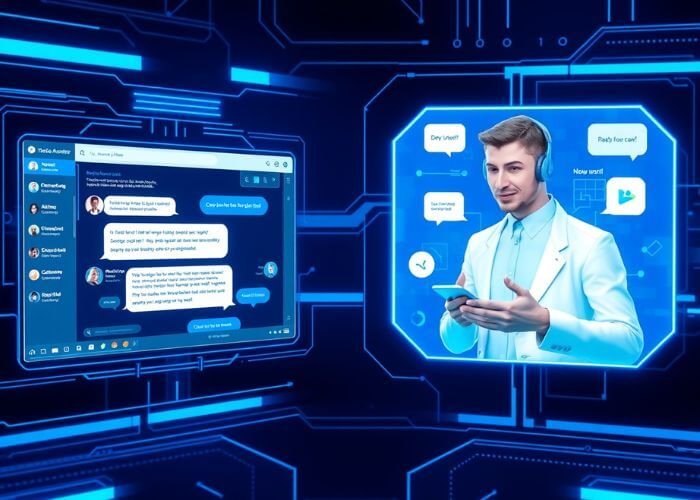
In today’s digital world, businesses need to engage customers faster, smarter, and more personally. AI-powered chatbots and voice agents are two of the most popular tools for improving customer engagement. But which one actually delivers better results?
This article dives deep into the strengths, weaknesses, and real-world impact of both AI solutions. By the end, you’ll know which technology best fits your business goals and how to implement it effectively.
What Are AI Chatbots?
AI chatbots are digital assistants that interact with users through text. They live on websites, apps, and social media platforms. They can answer questions, provide recommendations, and even handle transactions.
Why businesses rely on chatbots:
-
Instant 24/7 support for customers.
-
Lead generation by capturing visitor information automatically.
-
Personalized recommendations based on user behavior.
-
Cost efficiency: fewer human agents are required.
Example: A clothing retailer uses a chatbot to guide visitors to products based on size, style, and past purchases. As a result, the website sees higher engagement and faster conversions.
Chatbots are also evolving to handle complex queries using natural language processing (NLP). They don’t just respond; they understand intent, context, and customer sentiment.
What Are AI Voice Agents?
Voice agents are AI-powered systems that interact with users through speech. Think of Siri, Alexa, or Google Assistant, but tailored for business use. They understand spoken commands, answer questions, and perform tasks hands-free.
Advantages of voice agents:
-
Hands-free convenience for users who are busy or mobile.
-
Faster problem resolution with natural speech understanding.
-
Integration with smart devices for seamless interaction across platforms.
Example: A food delivery service uses a voice agent to allow customers to place orders using voice commands. This improves accessibility, speed, and customer satisfaction.
Voice agents are increasingly capable of multi-step interactions, like booking appointments, checking balances, or handling complex customer requests without human intervention.
Chatbots vs Voice Agents: Key Differences
| Feature | Chatbots | Voice Agents |
|---|---|---|
| Interaction Mode | Text-based | Voice-based |
| Availability | Website, App, Social Media | Smart Devices, Mobile, Web |
| Personalization | High through typed inputs | Moderate, depends on speech recognition |
| Accessibility | Great for online users | Ideal for hands-free users |
| Implementation | Easier and faster | Requires advanced voice AI |
| Best Use Case | Customer support, lead capture | Quick tasks, mobile interactions |
Both solutions enhance engagement, but the right choice depends on your audience, platform, and business goals.
Benefits of AI Chatbots for Customer Engagement
Chatbots offer a variety of advantages for businesses looking to boost engagement:
-
24/7 Availability – Customers can get answers anytime without waiting.
-
Scalable Conversations – Handle hundreds or thousands of users simultaneously.
-
Data Collection – Track preferences, behaviors, and purchase patterns for better personalization.
-
Reduced Costs – Minimize the need for large customer service teams.
-
Lead Nurturing – Engage prospects with targeted messages and suggestions.
Example: A SaaS company implements a chatbot to guide users through onboarding. Users get instant answers, reducing frustration and improving retention.
Pro Tip: Combining chatbots with AI analytics can predict user behavior, suggesting the next steps in real time — driving both engagement and conversions.
Benefits of AI Voice Agents for Customer Engagement
Voice agents excel in delivering a hands-free and natural interaction experience:
-
Convenience – Users can multitask or interact while driving or cooking.
-
Natural Interaction – Conversational speech feels more personal than typed responses.
-
Device Integration – Works seamlessly on mobile, smart speakers, and IoT devices.
-
Speed – Tasks like checking account balances or placing an order are faster with voice commands.
-
Customer Accessibility – Helps users who struggle with typing or prefer spoken communication.
Example: A bank uses a voice agent to allow customers to check balances, pay bills, and transfer money hands-free. This boosts engagement, loyalty, and user satisfaction.
LSI Keywords: voice AI automation, conversational voice systems, AI customer service, voice-enabled engagement.
Which AI Solution Drives Better Customer Engagement?
The answer depends on your audience, platform, and business goals:
-
Chatbots are ideal for businesses with high website traffic, text-based support needs, and multi-platform integration.
-
Voice agents are better for hands-free experiences, mobile-first users, and smart device integration.
Best practice: Combine both solutions. Many businesses now use chatbots on websites and voice agents on mobile apps and smart devices, creating a seamless multi-channel experience.
Example: An e-commerce platform uses chatbots to guide web visitors and a voice agent for mobile users. Customers enjoy fast, personalized support everywhere they interact.
Case Study: Combining Chatbots and Voice Agents
Company: SmartShop Online (fictional)
Industry: E-commerce
Challenge: Customers complained about slow support and inconsistent answers across devices.
Solution:
-
Implemented AI chatbots on the website for instant text support.
-
Added voice agents on mobile apps and smart speakers for hands-free support.
Results:
-
Customer engagement increased by 45%.
-
Average support response time dropped from hours to seconds.
-
Sales conversion rate improved by 30%.
This shows that integrating both AI solutions creates flexible, engaging, and efficient customer interactions.
Additional Tips to Maximize AI Engagement
-
Personalize Interactions: Both chatbots and voice agents should remember past interactions.
-
Use Natural Language: AI should sound friendly and conversational.
-
Test Frequently: Monitor analytics to see which solution drives the best results.
-
Integrate Multi-Channel: Combine web, mobile, and smart devices for full coverage.
-
Train AI Continuously: Update knowledge bases and speech recognition models regularly.
Following these tips ensures your AI tools drive maximum engagement and improve ROI.
Future of AI Chatbots and Voice Agents
The future is bright for AI customer engagement:
-
Hyper-personalization: AI predicts user needs before they ask.
-
Emotion detection: AI can sense frustration or happiness and respond appropriately.
-
Voice + AR/VR: Imagine speaking to a virtual store assistant inside an immersive environment.
-
Multi-language support: Engage global audiences without extra human resources.
-
Autonomous interactions: AI handles complex tasks end-to-end, reducing human workload.
Businesses that adopt both AI chatbots and voice agents will stay ahead in engagement, satisfaction, and customer loyalty.
Conclusion
Both chatbots and voice agents improve customer engagement in unique ways.
-
Chatbots excel in text-based personalization, scalability, and data collection.
-
Voice agents shine in hands-free, conversational experiences, perfect for mobile and smart device users.
The ultimate strategy? Use both in a multi-channel AI engagement system. This approach ensures customers receive fast, personalized, and seamless support no matter where they interact with your brand.
VelinorAI Solutions helps businesses implement intelligent chatbots and voice agents to maximize engagement and drive growth.
By combining chat automation, voice AI, and predictive analytics, companies can deliver smarter, faster, and more satisfying customer experiences than ever before.